Current Location: Blog >
Malaysian server
1. overview: why you should pay attention to login stability
① the hong kong server is sensitive to delays and packet loss, which directly affects player experience.② the network path from malaysia to hong kong has multi-operator transit and international link bottlenecks.
③ simply relying on the isp may not be able to guarantee delay jitter and packet loss recovery, and technical intervention is required.
④ this article focuses on server/vps, domain name resolution, cdn and ddos protection, and provides a feasible solution.
⑤ the article contains real cases and server configuration examples to facilitate practical verification and reproduction.
2. key points of routing and network layer optimization
① give priority to nodes with short physical access paths and high-quality backbone links (such as singapore, hong kong or tokyo international exits).② use multi-node bgp or intelligent routing to automatically switch to the backup line when link jitter occurs.
③ configure tcp optimization (such as enabling bbr congestion control, tuning tcp_keepalive/tcp_tw_recycle and other parameters).
④ adjust mtu/mss (commonly reduced from 1500 to 1420) to avoid packet loss caused by fragmentation.
⑤ perform link monitoring (ping, mtr) on the client and relay vps and record the jitter/packet loss rate for adjustment.
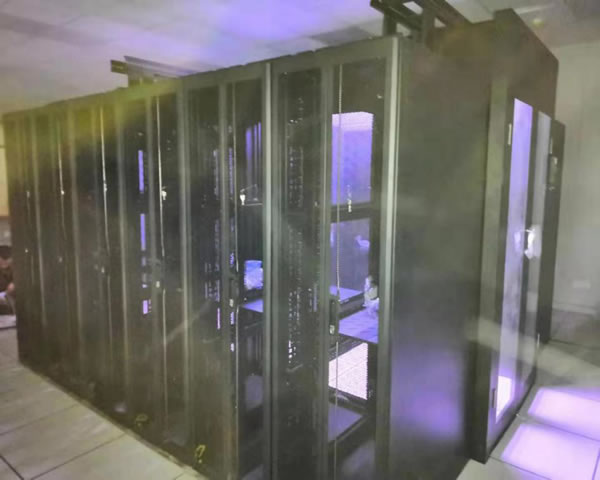
3. vps/host selection and configuration (example configuration)
① it is recommended to choose a vps provider that is geographically close and has sufficient bandwidth. priority is given to 1gbps ports or higher.② instance configuration example: 2 vcpu / 4 gb ram / 80 gb ssd / 1 gbps bandwidth (billed monthly).
③ system and kernel: ubuntu 20.04 + self-compile the kernel and enable tcp bbr or the bbr module of the official kernel.
④ network parameter examples: net.ipv4.tcp_congestion_control = bbr; net.ipv4.tcp_mtu_probing = 1.
⑤ configure traffic control and protection (iptables + fail2ban + rate-limit) at the same time to prevent small traffic ddos from affecting connectivity.
4. domain name and dns strategy
① use smart dns resolution (such as geodns or dns with health checks) to resolve players to the relay node with the lowest latency.② set a short ttl (for example, 60 seconds) combined with health checks to quickly switch abnormal nodes.
③ use the second-level domain name to distinguish game traffic (game.example.com) and create a separate resolution strategy.
④ when working with cdn or reverse proxy, ensure that the dns resolution returns the access ip of the cdn/proxy.
⑤ monitor dns resolution delay and hit rate to avoid dns becoming a single point of failure.
5. cdn and relay/agent architecture recommendations
① for continuous high-traffic game login or verification interfaces, use access-type cdn or tcp/udp proxy services similar to cloudflare spectrum.② self-built relay (vps as udp/tcp tunnel) is used to stably connect to hong kong servers and reduce multi-hop jitter in direct connections.
③ combined with the load balancer (l4/l7) to achieve multi-node traffic distribution and failover.
④ enable connection keep-alive and reconnection policies on relay nodes to reduce login failures caused by short-term network jitter.
⑤ use tls encryption for key interfaces such as login authentication and enable http/2 or quic to improve performance under packet loss.
6. ddos protection and availability guarantee
① use cloud ddos protection (cleaning center) as the first line of defense to avoid bandwidth saturation.② combined with local rate limit and connection number limit to prevent abnormal connections from occupying resources.
③ deploy traffic monitoring (netflow/sflow) and alarms on the vps to quickly locate the source of the attack.
④ set an automatic expansion or transfer strategy to automatically switch to healthy nodes when a single point is attacked.
⑤ maintain backup strategies and snapshots, quickly restore services when affected, and change ip/domain names for emergency response.
7. real cases and data demonstrations
① case background: a malaysian player directly connected to the hong kong server through a local isp with a delay of 200–280ms and a packet loss of 1–5%.② solution implementation: deploy a vps in singapore as a relay, use wireguard tunnel to the hong kong cloud host, and enable cloudflare spectrum for external access.
③ vps configuration: 2 vcpu / 4 gb / 80 gb ssd / 1 gbps, ubuntu 20.04, bbr enabled.
④ actual measurement results (30 ping/packet loss statistics before and after deployment): see the table below.
| index | direct connection (front) | relay + cdn (rear) |
|---|---|---|
| average latency (ms) | 220 | 78 |
| packet loss rate (%) | 2.4 | 0.3 |
| jitter(ms) | 18 | 6 |
8. practical steps and frequently asked questions
① summary of steps: select vps→configure kernel and network parameters→establish tunnel→connect to cdn/reverse proxy→monitor and optimize.② common problems: mtu errors lead to game freezes, slow dns cache switching, ddos cleaning delays, etc.
③ solution suggestions: check mtu item by item, shorten dns ttl, and prepare backup ip/nodes.
④ monitoring items: delay/packet loss/bandwidth/number of connections and sudden increase in abnormal traffic.
⑤ long-term maintenance: regularly conduct link tests, update the kernel and protection rules, keep backup nodes online and practice the switching process.
- Latest articles
- Popular tags
Analysis
Bandwidth Planning
Deployment Convenience
Website Acceleration
Disaster Recovery
Interconnection Between The Three Networks
CN2GIA Server
Data Transmission
Low Latency
Writing
Alibaba Cloud Ecs
Differential Analysis
Security Reinforcement
Cloud Desktop Migration
Cheap
Peak Response
Ddos
Record Query
Technology Related
Three Networks CN2
Discount Codes
Malaysian Dial-up VPS
Game Server Selection
Cn2vps Latency
Overseas VPS
Rds
Tk Malaysia Vps
Cloud Computer
Service Level Agreement
Related Articles
-

Establishment And Improvement Of Malaysian Server Quality Evaluation System
Discuss the establishment and improvement of Malaysia's server quality evaluation system, and analyze server performance, stability, security and other indicators. -

Technical Questions And Answers What Does WaMalaysia Server Mean? Analysis Of The Impact On Players And Webmasters
Explain what a Wamalay server is, its impact on player latency, packet loss and matching, as well as the key points and practical strategies that webmasters should pay attention to in terms of site selection, optimization and cost. -

Using Real Data To Illustrate The Differences In CN2 Access Between Malaysian Cities
Based on the measurement summary of public platforms and self-built probes, the differences in latency, packet loss, and routing when accessing China Telecom's CN2 backbone network in various Malaysian cities are analyzed, and optimization recommendations are provided to meet the EEAT standard.